
Basement insulation in Torrance CA - a warmer basement with no damp hidden behind it
Cold floors upstairs or a basement that smells musty? We sort out the damp first, then insulate where it actually pays off.
- Licensed and insured.
- Free quotes on site.
- Expect a reply within 1 business day.
What does insulating a basement in Torrance involve?
Basement insulation in Torrance means adding insulation to your foundation walls, and on a house that's already built we nearly always do it from the inside, because the outside is the better spot but means digging around the whole foundation.
Most people call SealPro Torrance Insulation Company because the rooms over the basement feel cold, the power bill keeps creeping up, or the basement smells like a gym bag nobody unpacked. The price comes down to how many square feet we're covering, whether the walls are bare concrete or already finished, which method fits, and whether there's water to deal with first. The schedule turns mostly on that water, since nothing goes on a damp wall until it's fixed, and on how much has to be moved away from the walls. I'll give you your own figure after I've seen the space, and the estimate lists what gets fixed first, what gets sealed and what goes in.
How do you know your basement needs insulation?
Cold floors upstairs
The floors over the basement feel cold underfoot even with the heat on. That usually means heat is slipping out through the foundation walls or the floor, and until it's fixed you're paying to warm the ground around your house.
A musty smell downstairs
A damp, stale smell that never airs out usually means moisture is coming through the walls or the floor. That has to be found before any insulation goes up, because the longer it sits, the more it soaks into the framing and whatever you've stored down there.
White chalky streaks
Powdery white marks on bare concrete mean water is moving through the wall and leaving minerals behind when it dries. Insulating over that doesn't stop the water, it just stops you from seeing it.
Foam options for basement walls
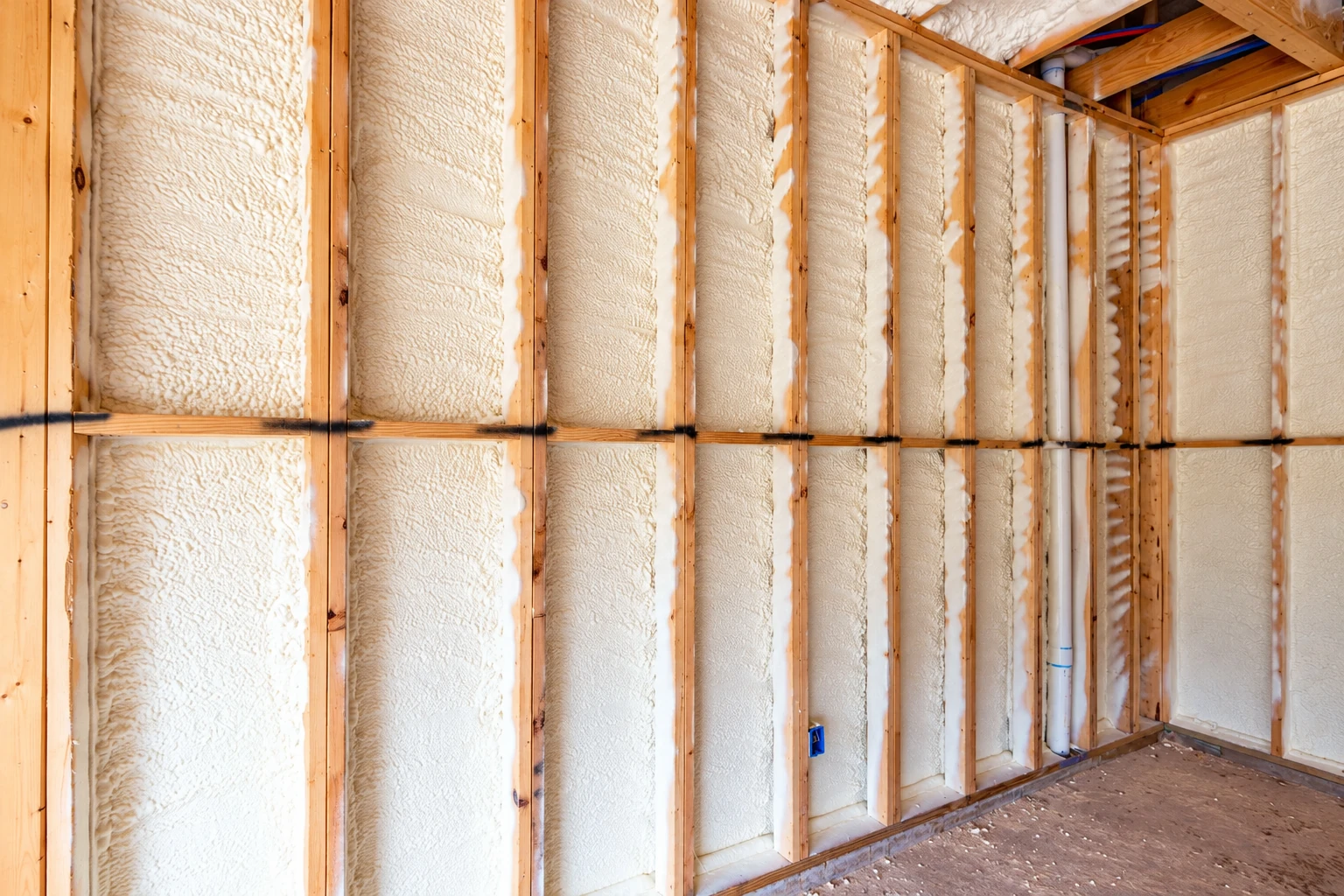
Closed-cell foam insulation
Worth a look if your basement walls are bare concrete, since this dense foam keeps ground moisture from reaching the room side.
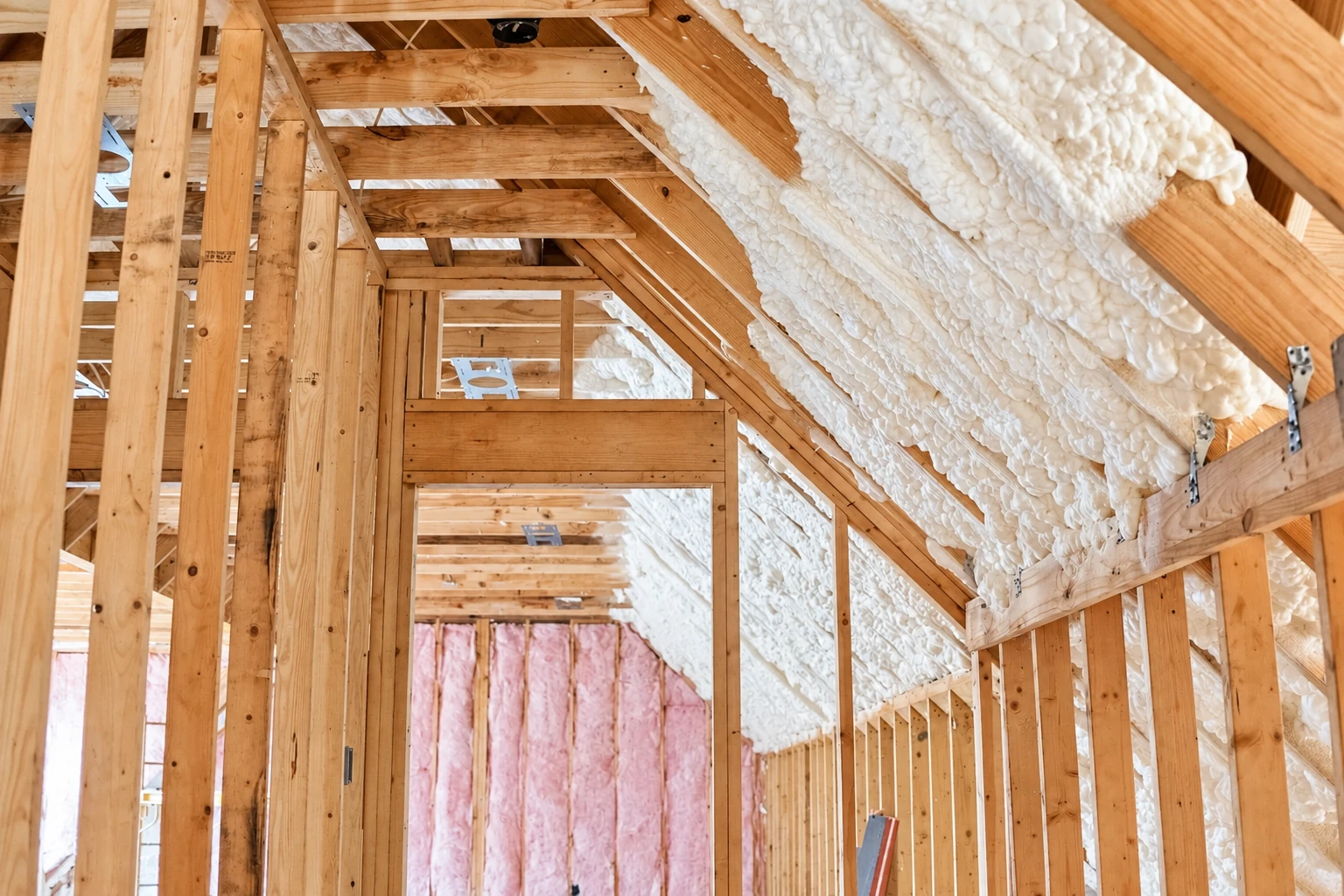
Open-cell foam insulation
A lighter, lower-cost foam that works well inside framed walls when the basement stays dry.
How we handle basement insulation
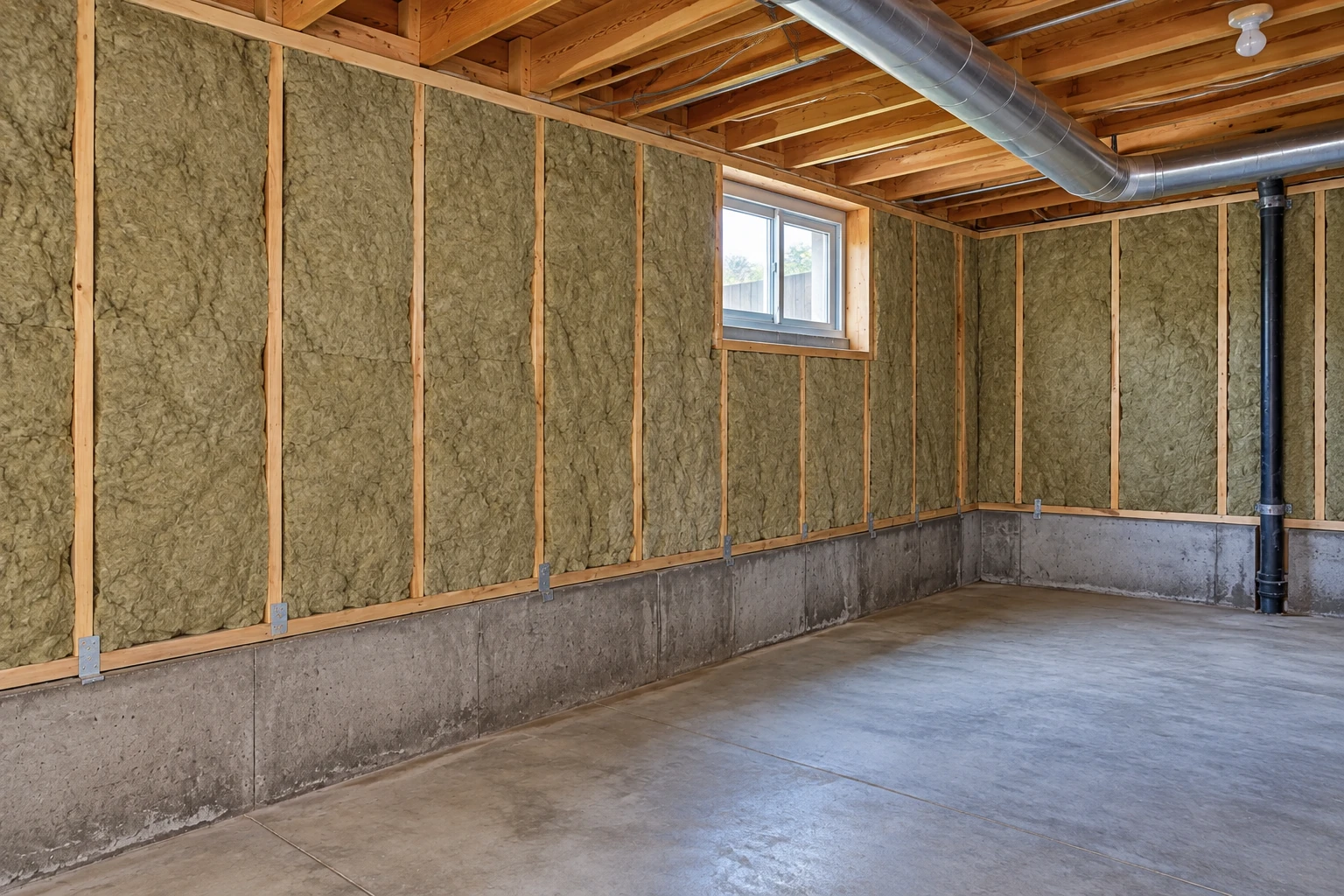
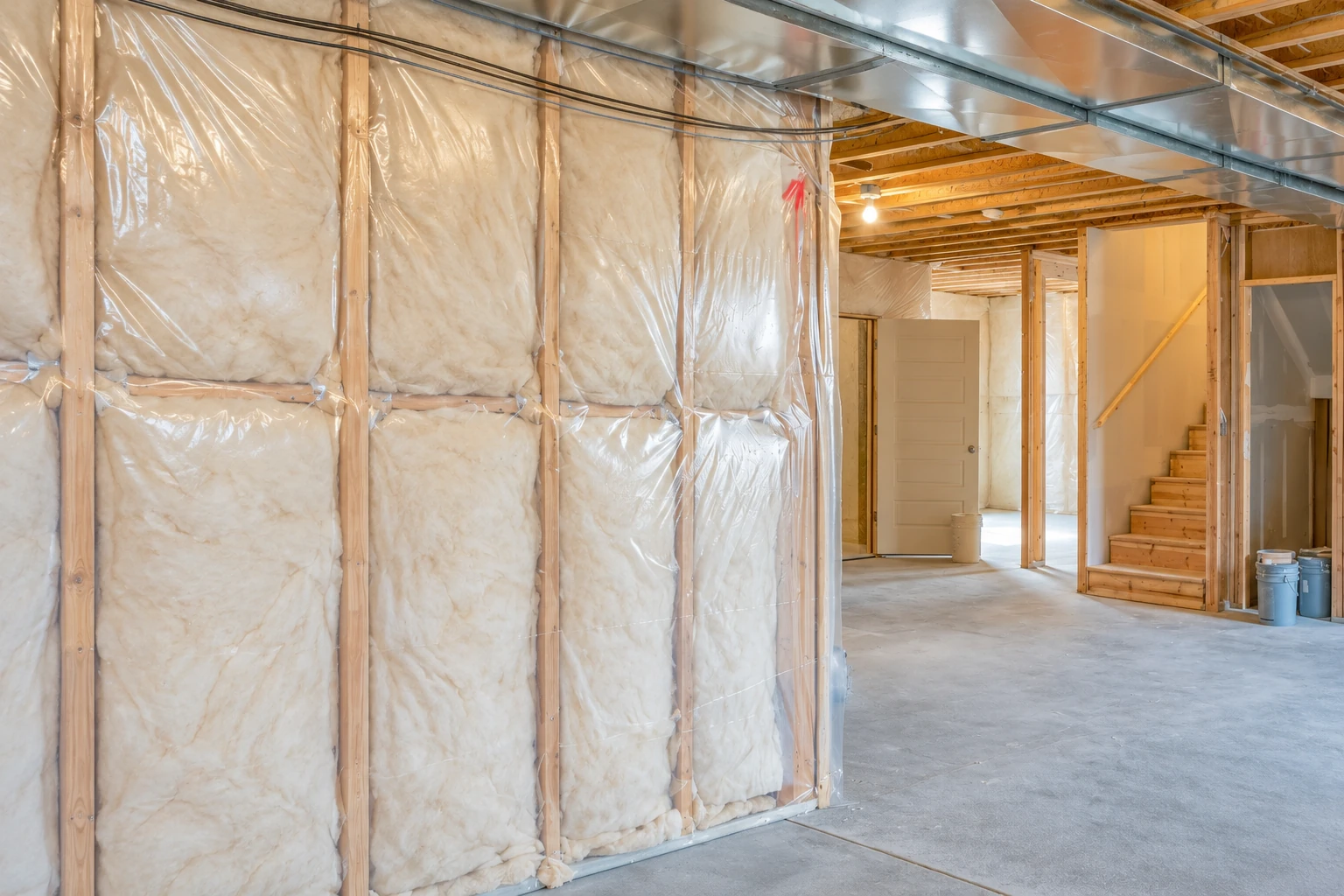
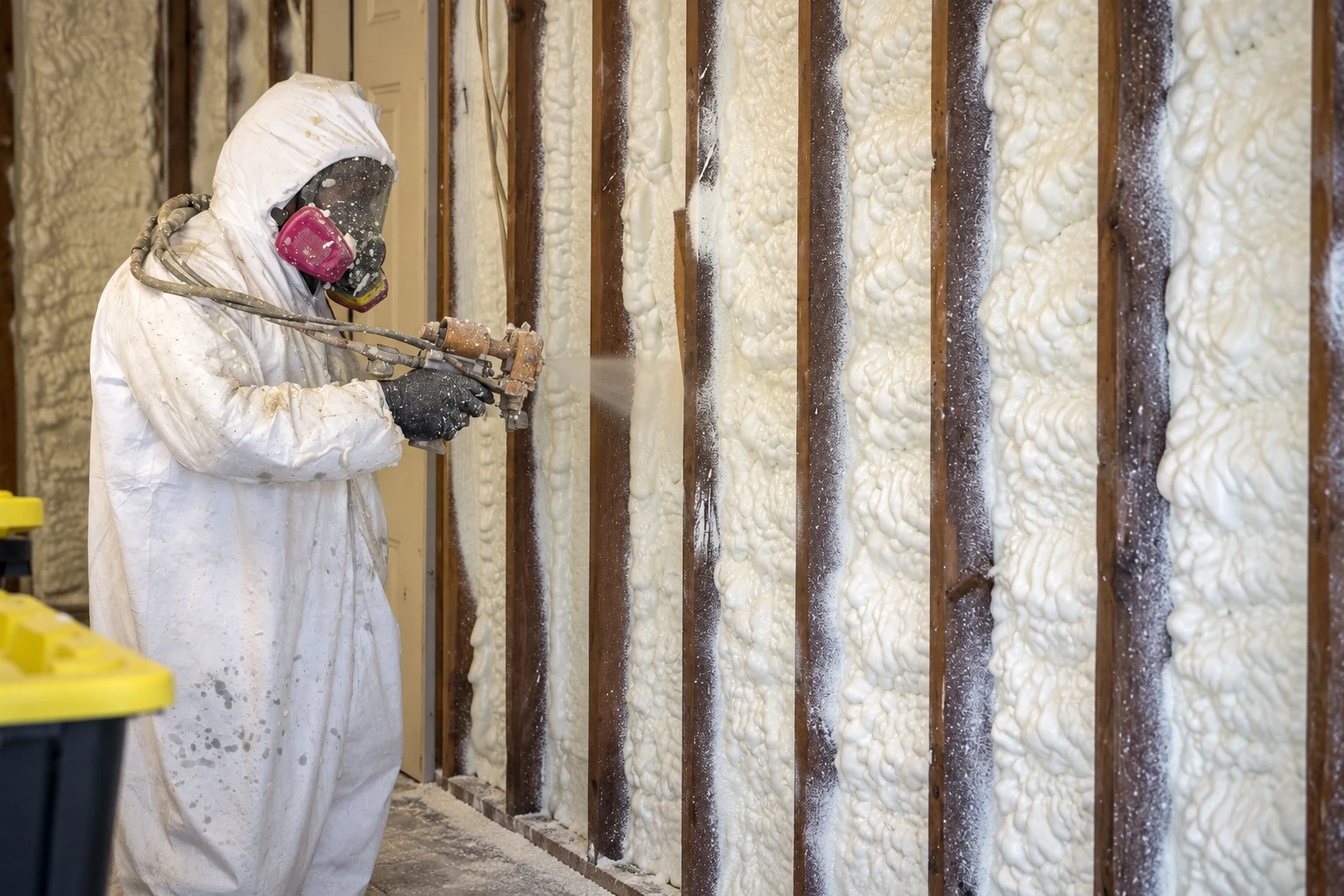
I check the walls for damp first, and if they're wet we sort out the water before any insulation goes on, because covering it only hides it. Then we weigh walls against floor. Insulating the foundation walls usually works better but often costs more, so some owners insulate the floor above the basement instead to save money, and I'd do the walls if your budget allows it. On bare concrete the crew sprays foam or fixes rigid foam panels straight to the wall, or builds a framed wall, fills it with batts or blown-in insulation, which is loose fill blown through a hose, and covers it with drywall. If the basement is already finished, we drill small holes, blow insulation into the wall cavities and patch them, so your walls stay where they are.
Foam does most of the work on bare walls. Against concrete we usually reach for closed-cell foam insulation, because the dense foam blocks moisture as well as heat. Open-cell foam insulation costs less, and it's a better fit inside a framed wall in a dry basement than sprayed onto raw concrete.
Bare foundation walls
This suits an unfinished basement, since foam or rigid panels go right onto the concrete, or a framed wall goes up if you plan to finish the space later. Federal building guidance calls for covering foam that isn't fire-rated with drywall or an ignition barrier, a coating that slows fire, so we leave none of it bare.
Walls that are already finished
This suits you if you like the walls you have and don't want them torn out. We blow insulation in through small holes in the drywall, then patch the holes so you're left with a warmer room and the same walls.
Get a free basement insulation estimate in Torrance
We'll reply within one business day to set a time for me to come look. The on-site estimate is free with no obligation, and if you'd rather talk, call (424) 318-3075.
Call (424) 318-3075Why Torrance homeowners call SealPro Torrance Insulation Company for basement work
I look before anyone sells
I come out to every job, look at the space and write the estimate myself, and a crew I trained does the install. I check the work before we leave, so the person who wrote the estimate is the one who signs off on the job.
In business since 2017
I started out insulating attics for neighbors in Torrance on weekends, and the calls kept coming until it turned into the job. Those attics taught me what goes for basements too, which is that you fix what's wrong before you cover it up.
Licensed and insured for basements
We're licensed and insured, which is what you want once a basement job is too big for a handyman. You can ask about both when I come out for the estimate.
Down there, the order matters more than the material, so the water gets fixed first and the insulation goes in after. Our work is satisfaction guaranteed, and the first step is to send a request or call (424) 318-3075.
What happens after you call about your basement?
Call or send a request
Call (424) 318-3075 or fill in the form, and we'll get back to you to set a time for me to come out. Tell us whether the walls are finished and if you've seen any damp, so I know what to look for.
I look, then write it up
I check for damp, water coming in and pest damage, look at what's already there and measure before I put anything on paper. Your estimate lists what gets fixed first, what gets sealed and what goes in, so you know the whole cost before we start.
The crew installs and cleans up
A crew I trained does the work, covers any foam that needs it and cleans up after. I go over the job myself before we call it finished.
Common questions
How much does basement insulation cost in Torrance?
Basement insulation in Los Angeles usually costs about $1.50 to $4.50 per square foot, and that's the going rate in the area, not our quote. Where your job lands depends on whether we're doing the walls or the floor above, which method fits, and whether there's water to fix first. I'll give you your own number after I've seen the basement.
Why does moisture matter before insulating a basement?
Insulation over a damp wall hides the water, and sometimes it traps the water in the wall and makes the damage worse. Fiberglass and cellulose can soak up a lot of moisture and stay damp against basement walls, and a plastic vapor barrier on the room side makes that worse by holding the moisture in. That's why the water comes first on our jobs.
How do I know if a contractor can legally insulate my basement in California?
In California, someone without a contractor's license can only take on minor work up to $1,000, and only when the job needs no permit and they have no one working for them. A bigger basement job, or any job with a crew, calls for a licensed contractor. Ask for the license before you sign anything.
How much of a deposit can a contractor ask for in California?
A California contractor can't ask for or take a down payment of more than $1,000 or 10 percent of the contract price, whichever is less. Check the deposit on any quote against that before you sign, and if it's higher, ask why. The state contractors board is the place to check the rule.
How long does basement insulation take?
Most of the time goes to whatever comes before the insulation, so a dry basement with bare walls moves fastest and a damp one waits until the water is fixed. Framed walls and finished walls take longer than foam on bare concrete, and with spray foam you stay out of the basement until the re-entry time, when the foam maker says it's safe to come back in. I'll tell you how long yours should take at the estimate.
Is it safe to insulate a basement with a furnace or water heater in it?
It can be, but if the furnace or water heater vents by natural draft, pushing its exhaust up the flue on its own, federal building guidance calls for a combustion safety test first. That test checks that exhaust gases aren't being pulled back or spilling into the house. Insulating and sealing a basement changes how air moves around those appliances, so mention them when you call.
Book a look at your basement
Have the rough square footage handy, plus whether the walls are bare or finished, any damp spots, and whether a furnace or water heater lives down there, so I come out knowing what to look for.