
Commercial insulation in Torrance CA - a building that holds its temperature
Top floor too hot, pipes sweating or the power bill climbing? We find out what's worth insulating and do that part right.
- Licensed and insured.
- Free quotes on site.
- Expect a reply within 1 business day.
Is it worth insulating your commercial building in Torrance?
Commercial insulation for a Torrance building covers two things. The first is the shell, like the walls and roof of a metal building. The second is the mechanical systems, the pipes, ducts and equipment that run hotter or colder than the air around them. Insulating them keeps heat where you want it and off the power bill.
Building owners and property managers usually call us because a floor runs hot, a mechanical room sweats or the bill keeps climbing, and the real question is whether more insulation will fix it. The price moves with the size of the roof and walls, which systems you want covered, what's already in there and whether any of it has to come out first. The schedule turns mostly on that last part, because we find out what old material is before anyone disturbs it. When I come out, the estimate gives you your own number and the order the work goes in.
How do you know your building needs insulation work?
Floors that swing with weather
The top floor or the space under a metal roof bakes in the afternoon and chills by morning, while the HVAC runs all day. That usually means the roof or walls have thin or missing insulation, and every month you wait, the power bill pays for it.
Pipes and ducts sweating
Beads of water on cold lines, drips on ceiling tiles or stained pipe wrap point to condensation on surfaces running colder than the room. Left alone, the drips can grow mold below and damage the insulation's outer jacket, so the fix gets bigger.
Old insulation sagging loose
Batts hanging off a metal roof or wrap falling off a pipe have mostly stopped doing their job. In an older building, find out what that material is before anyone pulls it, which we cover in the questions below.
Often done alongside commercial insulation
Crawl space vapor barrier
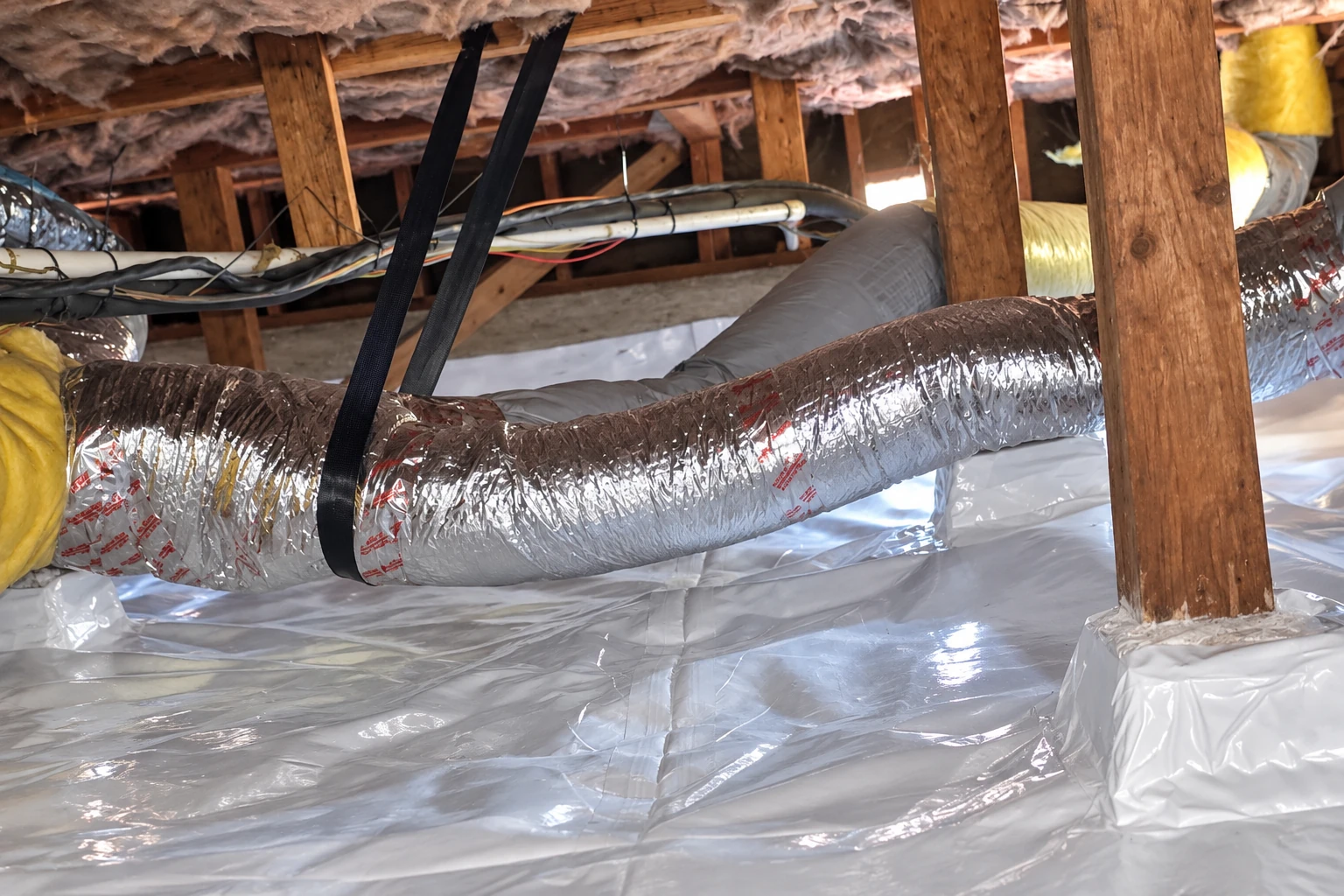
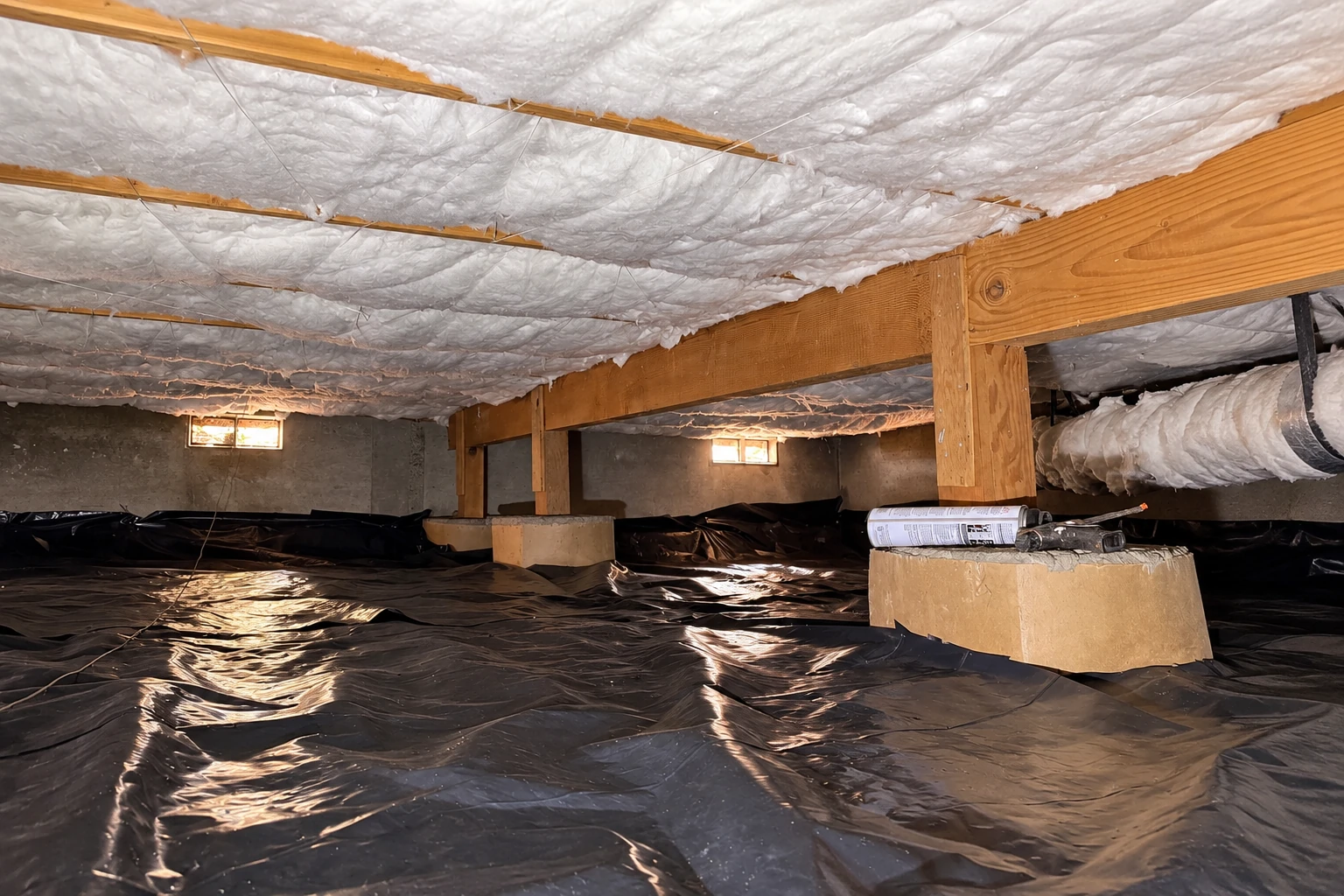
If your building sits over a crawl space, a sheet over the dirt keeps ground moisture away from the floor framing and the new insulation.
Vapor barrier installation
Where damp air can reach a cold wall or ceiling, a barrier keeps that moisture out of the insulation so it keeps working.
How we handle commercial insulation
I start by walking the roof, the walls and the mechanical room, and I ask what the old materials are before anyone disturbs them. Leaks and damp spots get fixed before any insulation goes in, because insulation can't fix what it's covering. If I think adding more probably won't pay off in your building, I'll tell you that plainly. When it will, the bid names the certified product we plan to use. Our crew seals the gaps around pipes and openings first so the new insulation isn't fighting a draft, then installs it as full at the edges as in the middle and cleans up.
Moisture is the other half of the job. If the building sits over a crawl space, a crawl space vapor barrier can go down first so ground damp stays out of the floor. Where walls or ceilings need protecting, vapor barrier installation goes in with the insulation so it stays dry.
Roof and wall insulation
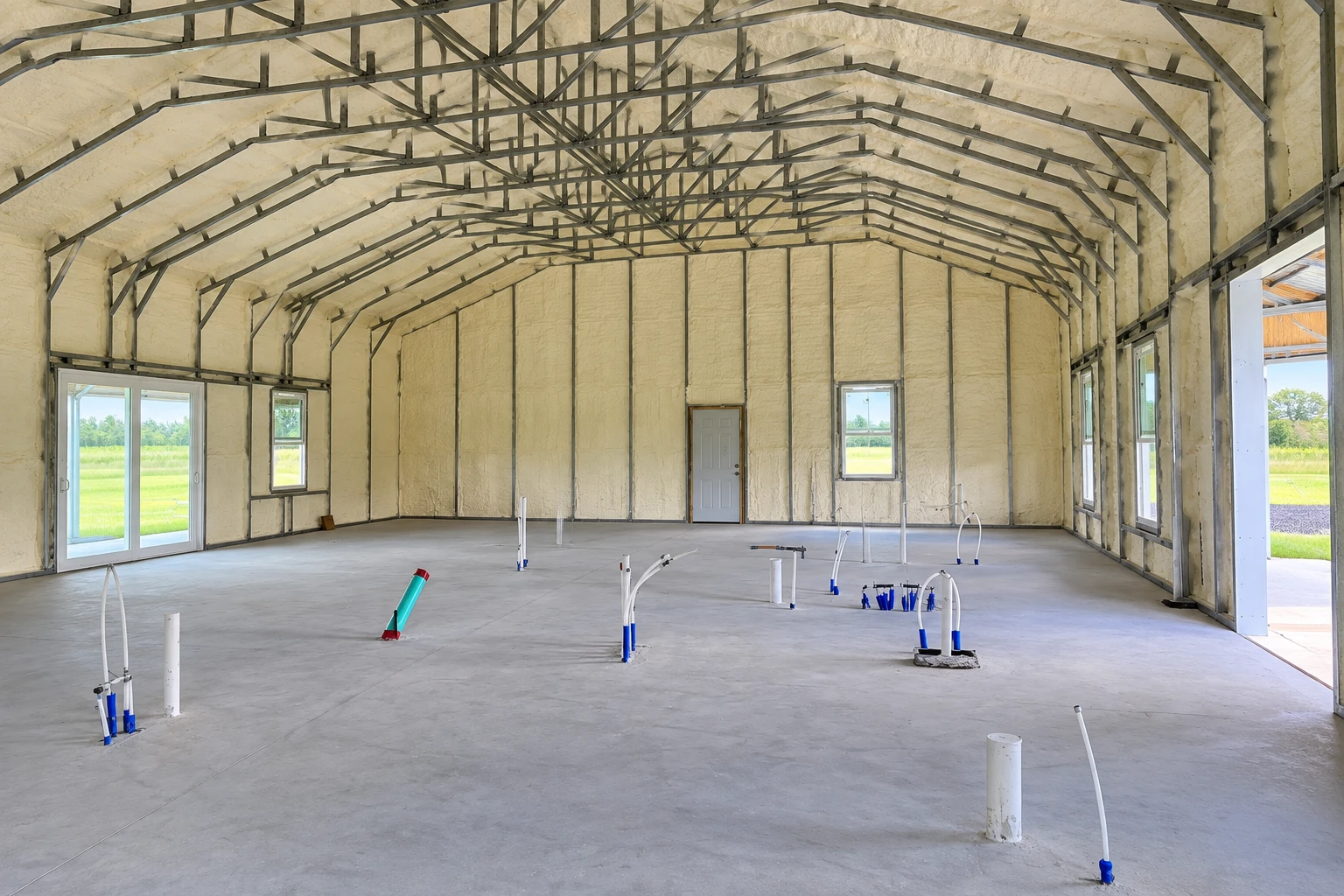
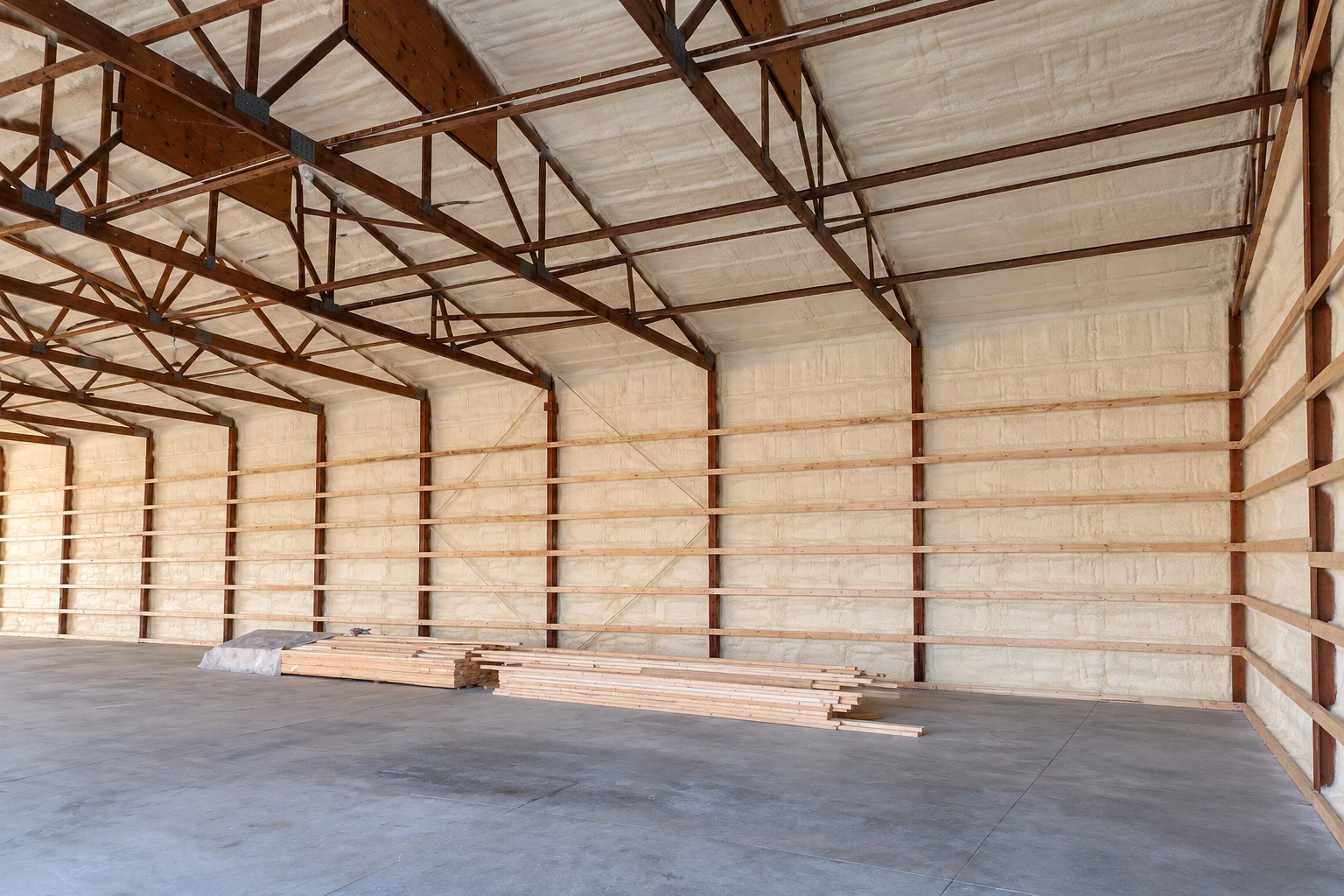
This suits metal buildings and spaces under the roof that swing hot and cold, because the shell is where that heat comes and goes. Foam costs more and seals air as it insulates, but sealing the gaps and adding fiberglass or loose fill usually wins, unless your ductwork runs up there.
Pipe, duct and equipment insulation
This suits mechanical rooms and lines that run hotter or colder than the room, because insulation keeps that heat where it belongs. It can also cut condensation, protect people from hot surfaces, guard against freezing and quiet noisy equipment.
An added layer at re-roof time
If you're already re-roofing a metal building, or putting on a built-up or single-ply roof, fiberglass insulation can go in as an added layer. It suits owners with roof work on the calendar, since the roof only has to be opened once.
Get a commercial insulation estimate for your building
Send the form and we'll reply within one business day to set up a free, no-obligation look at your building. Rather talk it through? Call (424) 318-3075.
Call (424) 318-3075Why Torrance building owners call SealPro for commercial insulation
I write every estimate myself
I come out to look at every job and write the estimate myself, then a crew I trained does the install. I check the work before we leave, so the person who priced the job is the one who signs off on it.
Nine years, started in Torrance
We've been at this since 2017, and it started with me insulating attics for neighbors here in Torrance on weekends. I learned the trade one hot attic at a time, which is why I look before I sell.
Licensed and insured for this work
We're licensed and insured. That matters when you're responsible for the building, because a crew on your roof or in your mechanical room shouldn't be a risk you carry.
Send a request or call (424) 318-3075, and I'll come out and look at the building.
What happens after you call about commercial insulation?
Call or send a request
You call (424) 318-3075 or send the form with a few details about the building. We get back to you and set a time for me to come out.
I walk the building
I look at the roof, walls, crawl space or mechanical room and ask what the existing materials are before anything gets touched. The estimate lists what gets fixed first, what gets sealed and what goes in, with the price, before anything is booked.
Crew installs, I check
The crew I trained does the install and cleans up when it's done. I check the work myself before we call it finished.
Common questions
What is the best way to tell if insulating our Torrance building will pay off?
Look hard before you spend, because a national retrofit guide for office buildings calls adding insulation to an existing shell expensive. It says that step may not pay off in mild climates or where the current insulation already meets an energy code, and that a careful analysis, including energy simulations, helps an owner judge the benefit first. I start by looking at what's already in place before I put anything on paper.
Which climate zone is Torrance in, and why does it matter for insulation?
Torrance is the city the state uses to represent Energy Code Climate Zone 6. The code's rules for the building shell, meaning the walls, roof, windows and doors, change by zone, and the state's standards cover alterations and additions to existing buildings as well as new construction. So the zone matters for an older building, too.
What happens if the old insulation in our building contains asbestos?
Sealed inside intact material, asbestos isn't a health hazard, but contact, renovation or tearing it out can put its fibers in the air. That's why a job that disturbs old insulation needs a plan for what's in it before work starts. If you've had asbestos findings before, mention them on our request form so I know before I come out.
Which insulation products and contractors does California allow for commercial work?
The state's Energy Commission allows only insulation products certified by the Department of Consumer Affairs, so it's fair to ask each bidder which certified product they plan to use. Ours is written on the bid. On the contractor side, the state's contractor licensing board lists a separate insulation and acoustical class for installing materials that control temperature or sound.
How much does commercial insulation cost in Torrance?
There's no flat price, because the cost comes from your building, not a rate sheet. The size of the roof and walls, how many pipes and ducts need covering, how hard they are to reach, which product fits and whether old material has to come out first all move it. You get your number at the estimate, after I've seen the space.
How do I get my building ready for a commercial insulation crew?
Set aside a clean, dry, secure spot for materials and equipment before delivery, since trade installation guidance calls for one. The same guidance says insulation that gets wet or damaged should come off the job instead of going into the building, so that's a fair question to ask any installer, us included.
Book a look at your building's insulation
Have the building type, the areas or systems you want insulated and any past asbestos findings handy, so I know what to look at when I come out.